
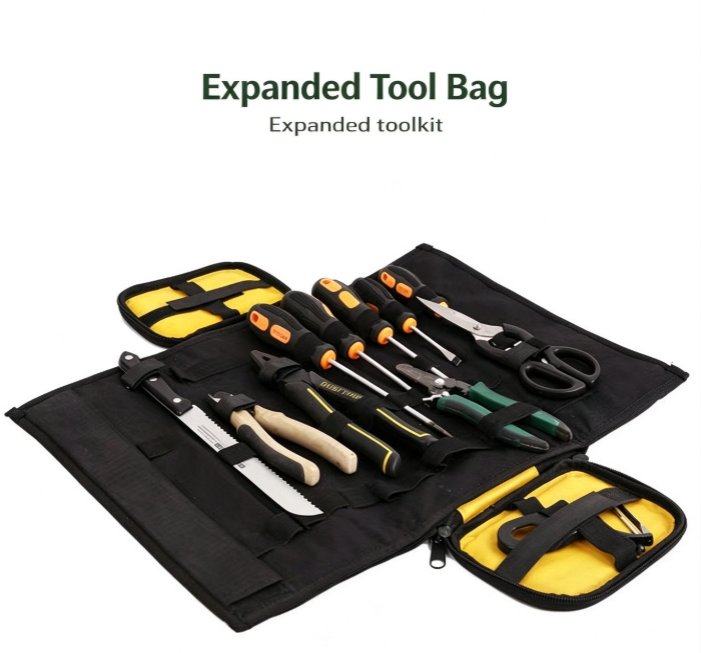
Folding Tool Bag Samples: Define the Folded State
For a folding tool bag sample, ask the supplier to identify the open form, the folded form and the actual delivered condition of the same model. Request matched reference photographs and a statement of whether any closing or retaining component is fitted or separate. Agree the measuring state before adding packed dimensions to the inquiry. A catalogue description of foldability does not by itself define a folding method or the contents of the delivered pack.
Use matched views of the same proposed bag
Yuheng lists a Foldable Handheld Tool Bag. The product reference gives the buyer a starting model for a sample inquiry. Ask the supplier to show the relevant open and folded views of that proposed model rather than combining an attractive open view from one listing with a compact view from another. Matched views help establish the relationship between the visible form and the bag actually being offered.
Give the views simple identifiers and state what each is intended to show. A photograph might illustrate the open compartments, the carrying arrangement or the supplied packing state. Those purposes are different. If a view contains tools or another filler, ask whether they are illustrative or included. The sample record should identify the bag itself before any assumptions about its contents affect the discussion.
Separate foldability from the agreed delivered condition
A bag described as foldable may be offered in more than one delivered arrangement. Ask the supplier how the proposed item will be supplied: open, folded or otherwise arranged as specifically described. Do not select the answer by interpreting a catalogue title. A buyer reviewing packing space needs the actual proposed state, not a general statement that the bag can change shape.
If a retaining strap, fastening part or another separate component is relevant, have the supplier identify its inclusion and supplied position. Ask whether it is already fitted or accompanies the bag separately. Keep that answer connected to the same model reference. It should be possible for the receiving team to understand the agreed condition without experimenting with unfamiliar parts or guessing which photograph represents the delivery.
Compare the references used for each decision
Ask for the missing reference instead of treating all four as interchangeable. A folded photograph can be useful for discussion while the supplier has yet to state the production packing condition. Keep that distinction visible in the inquiry. It avoids describing a preliminary image as an agreed packing specification before the supplier and buyer have actually settled the point.
Reference state | Question it answers | Question it does not settle
Open bag | Visible arrangement of the proposed item | Delivered folded size
Folded reference | Intended compact arrangement | How every order will be packed
Delivered sample | Observed condition received | Any unconfirmed production variation
Agreed packing description | Condition covered by the offer | Independent performance or capacity claims
Define a measuring state before recording a size
If folded dimensions matter, first ask the supplier to define the condition in which they are measured. State whether the referenced bag is empty and which separately supplied components are present. Ask for identified measurement points and units. Do not estimate a folded size from the perspective or background objects in a catalogue photograph. Measurements without a shared state can be difficult to compare even when the numbers look precise.
Keep overall bag measurements separate from carton or individual-pack measurements. The bag’s folded form does not automatically determine the dimensions of its shipping packaging. Request the applicable packing proposal when needed and label its scope. Any quantity, dimensions or arrangement should be supplied and confirmed for the actual offer, rather than invented to complete an otherwise unfinished inquiry sheet.
Review the sample without losing its arrival condition
Before opening or rearranging a sample, photograph its received condition with the sample identifier visible. Check the proposed supplied components against the supplier’s statement. Record any difference clearly before further review changes the arrangement. This preserves a useful reference for the supplier and for colleagues who did not see the original unpacking.
If the bag’s open and folded views do not seem to correspond, ask the supplier to explain the difference. Avoid assigning a cause from appearance alone. The sample may represent a different version, or a reference may need clarification. A question linked to the exact photograph and model is easier to resolve than a general statement that the sample is wrong or does not fold as expected.
Keep packing approval limited to what was reviewed
When the delivered-state reference is accepted, identify the agreed model, supplied condition and supporting photographs in the order attachment. Keep unresolved material, load, durability or other use requirements separate. A satisfactory folded-state reference does not independently establish those properties. If they matter to the purchase, request the applicable supplier information and review them on their own basis.
For a reorder, resend the accepted arrival-condition reference and ask whether the proposed packing and supplied components remain unchanged. Retain any new proposal as a revision rather than replacing an earlier photograph silently. This gives future buyers a clear comparison point while allowing the supplier to identify practical changes without confusing them with the previous agreement.
• Request open and folded views tied to the same model.
• State the actual delivered condition separately from foldability.
• Identify the measuring state before accepting packed-size values.
Frequently asked questions
Does foldable mean the bag will arrive folded?
No. Ask the supplier to state the proposed delivered condition. The ability to change form and the agreed packing arrangement are separate pieces of information.
Can a folded size be estimated from a catalogue picture?
Do not use an estimate as a specification. Request the supplier’s measurement points, units and sample condition so that the value can be understood and compared.
Why photograph the sample before opening it?
It preserves the actual arrival condition and the relationship of supplied components. Later handling may change that arrangement, leaving the original packing question harder to resolve.
Product and contact references
Selected bag reference: https://yuhengbag.com/product/foldable-handheld-tool-bag/
Contact Yuheng: https://yuhengbag.com/contact/
Yuheng blog: https://yuhengbag.com/blog/