
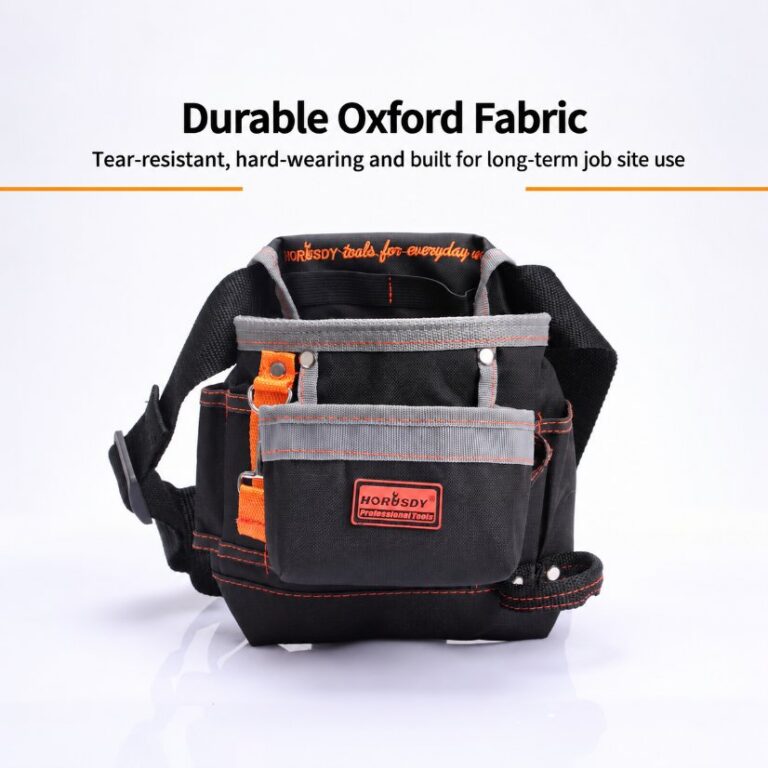
Tool Waist Bag RFQs: Separate Pockets from Pieces
When sourcing a tool waist bag, ask the supplier what any catalogue piece count describes before using it in an order line. Separate the bag’s pockets from its detachable components and from any tools or other items included with it. Request an explicit supply list for the identified model, with inclusions and exclusions stated. That makes quotations comparable without treating a catalogue number or a staged product photograph as a complete packing list.
Identify what the catalogue number actually refers to
Yuheng’s catalogue includes an item named 8pc Tool Waist Bag. Use that exact product reference when asking about the count, but do not assume the number means tools, pockets or separate bags. Those are different descriptions of a product. The supplier should explain the intended meaning and connect its answer to the particular model covered by the quotation.
A buyer may receive offers that repeat the same short catalogue name while describing different supply boundaries. One offer might concern an empty bag, while another might describe a combination proposed for a particular customer. The product name alone does not resolve that distinction. Ask for a plain statement of the article being supplied before discussing optional combinations or using a count in downstream sales material.
Keep pocket layout and included contents on separate records
A pocket-layout reference shows how the bag is arranged. A supply list states what the order contains. Number the visible pockets or storage positions on an identified reference if their arrangement matters to the buyer, then ask the supplier to confirm that layout. Avoid using the number of visible openings as proof of how the supplier counts pockets, especially where a flap or overlapping section may obscure the construction.
For included contents, request a named list rather than a broad phrase such as complete set. If the supplier proposes separate tools, inserts, straps or other components, have each item identified and its inclusion status stated. Do not infer the intended contents from familiar shapes in a photograph. A staged image may be useful for explaining an arrangement without establishing that every pictured item forms part of the offer.
Compare the meanings before comparing quotations
This comparison prevents a purchasing team from resolving a scope difference with an assumed conversion. If one quotation is for a defined combination and another for an individual bag, ask for a common basis or preserve that difference in the evaluation. Do not divide a quoted amount by an unexplained catalogue count and treat the result as a meaningful per-item comparison.
Count or description | Question for the supplier | RFQ record
Catalogue piece count | What exactly is being counted? | Supplier’s model-specific definition
Pocket count | Which openings or positions are included? | Marked layout reference
Separate components | Which physical items accompany the bag? | Named supply list
Pictured contents | Included, illustrative or optional? | Explicit inclusion/exclusion statement
Order quantity unit | Individual bag or defined combination? | Unambiguous quotation unit
Ask how the bag and separate components arrive
If a strap, belt or attachment component is part of the offer, ask whether it is fitted or separately supplied. Identify it in the supply list and request a photograph of the proposed delivered condition when necessary. The receiving team needs to know whether an apparently loose item is intentional, optional or unrelated to the order. A general assembled photograph may not answer that question.
Keep the bag’s intended carrying arrangement separate from capacity or safety claims. A visible loop or strap does not establish a load rating, compatibility with every belt, or suitability for a specific task. If a buyer has such a requirement, describe it to the supplier and ask for the applicable information. Do not turn a component-count discussion into an unsupported performance assurance.
Use an unpacking record to confirm the agreed scope
When a sample is supplied, identify its model and the supply list it represents. Record the contents before mixing them with other samples. Check whether the bag, any separate components and any explicitly included contents match that list. Photograph unresolved items with their sample reference and ask the supplier to identify them. This is more useful than reporting that the set looks incomplete without naming the missing or unexpected item.
A sample may clarify the physical layout while leaving a quotation question open. For example, the sample could show an optional component that has not been included in the offer. Ask the supplier to identify such differences rather than silently treating sample presence as commercial inclusion. Keep the sample observation and the agreed order scope linked but distinguish what each record actually establishes.
Freeze an order unit that another buyer can understand
The final order description should name the model, define the purchasing unit and reference the accepted supply list. Retain the supplier’s explanation of the catalogue count. State any agreed exclusions clearly so that the next person reviewing the order does not have to reconstruct the meaning from an old product title. A concise, explicit description is more useful than an unexplained set label.
For repeat orders, send that same scope record and ask the supplier to identify any proposed changes. If an optional tool or another component is now requested, place it on an identifiable line rather than assuming that the old count expands to cover it. This preserves the original agreement while allowing a new combination to be reviewed on its own terms.
• Ask what the catalogue count means for the exact model.
• Record pocket layout separately from the supplied contents.
• Define the order unit and every included or excluded component.
Frequently asked questions
Does a number in a product name prove the included contents?
No. Ask the supplier to define the number for the offered model. It may not refer to the same type of item that the buyer has assumed, so the supply list and quotation unit should be explicit.
Can a photograph be used as the only packing list?
Use it as a reference, then ask which pictured items are included, illustrative or optional. A named list is easier to compare and to use during sample unpacking.
Does confirming pockets establish a carrying capacity?
No. Pocket arrangement describes the storage layout. A capacity or other performance requirement needs its own supplier confirmation and applicable evidence.
Product and contact references
Selected bag reference: https://yuhengbag.com/product/8pc-tool-waist-bag/
Contact Yuheng: https://yuhengbag.com/contact/
Yuheng blog: https://yuhengbag.com/blog/